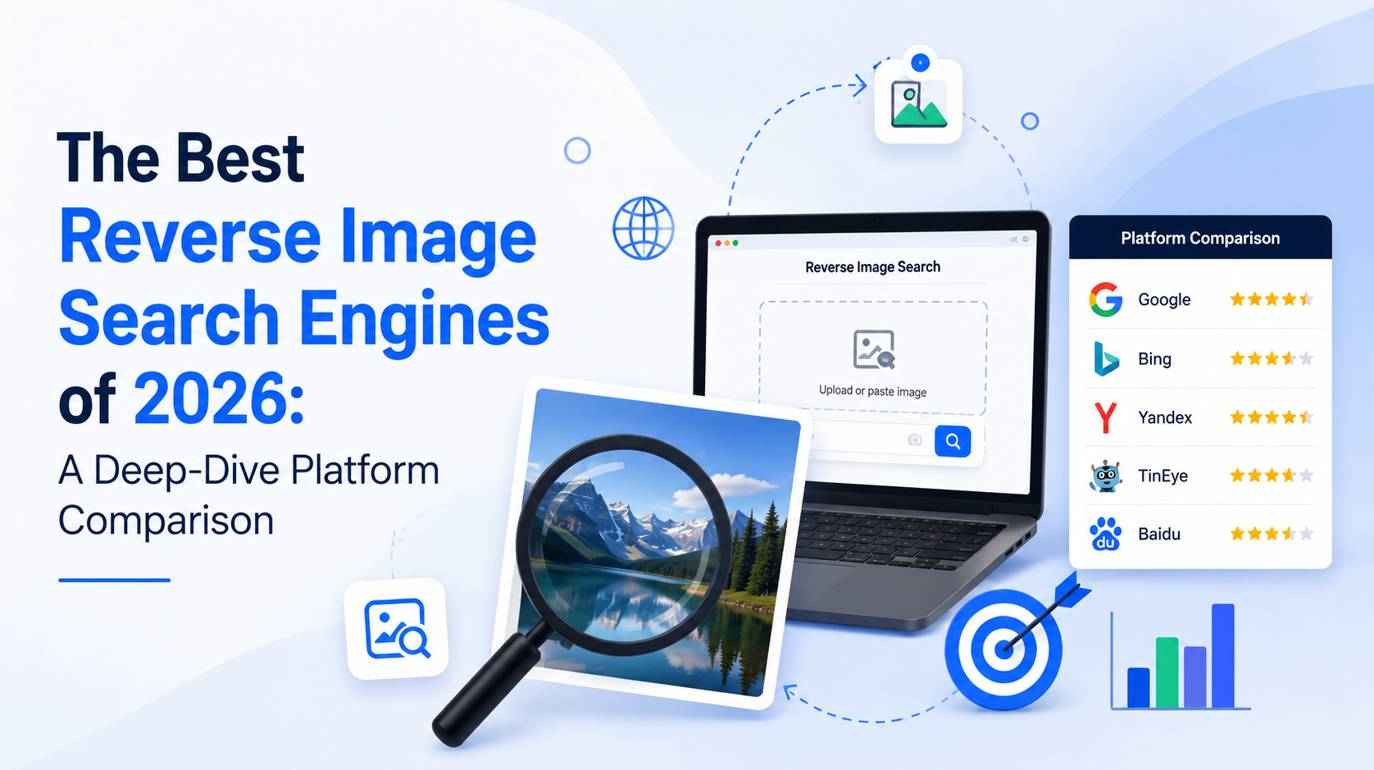
The Best Reverse Image Search Engines of 2026: A Deep-Dive Platform Comparison
A single search engine does not index the entire web. The visual web is fractured into proprietary silos, regional databases, and walled gardens. If you are conducting a digital investigation, enforcing copyright, or simply trying to track down the origin of a meme, relying on just one platform means you are only seeing a fraction of the internet. Navigating this landscape requires understanding exactly how each algorithm prioritizes visual data.
What is the Best Reverse Image Search Engine?
The best reverse image search engine depends entirely on the nature of your visual query. Google Lens leads in object and landmark identification; Yandex excels at facial recognition and identifying regional content; and TinEye offers strong exact-duplicate tracking for copyright enforcement.
For comprehensive coverage, an aggregate tool like SnapZain Reverse Image Search combines multiple engine databases into one search.
A Comparison of Reverse Image Search Tools with Detail Performance Matrix
To optimize your search workflow, you need to match the tool to the task. Here is how the top players in 2026 stack up across core capabilities:
Deep-Dive Profile: Google Lens
Google Lens has largely replaced the legacy Google Images reverse search, shifting the focus from finding duplicate image files to identifying objects within the image. If you are the one who is looking to identify any photo, see our detailed guide on How Reverse Image Search Works to start from the basics mechanism behind every image search technique.
- Strengths
Google Lens is unparalleled for commercial and physical-world queries. Its strength lies in its massive index of product data, landmarks, plants, and animals. It is highly integrated into Android and Chrome, making it the most frictionless tool for casual, everyday searches.
- Weaknesses
Google actively suppresses facial recognition for privacy reasons. If you upload a photo of a person, Lens will typically identify their clothing or the background rather than matching the face. It is also less effective at finding exact, uncropped copies of a specific image file across the web.
Bing Visual Search & OCR Text Extraction
Microsoft’s Bing Visual Search operates as a strong competitor to Google, particularly when integrated with Copilot AI features.
- Strengths
Bing excels at Optical Character Recognition (OCR). If you have an image containing dense text, infographics, or code, Bing is highly proficient at extracting that text cleanly. It also offers a robust "Visual Search" crop tool, allowing you to easily isolate a specific element within a larger photo for targeted product discovery.
- Weaknesses
Bing's index is simply smaller than Google's. While its shopping integration is strong, it often surfaces fewer obscure or historical results compared to its larger rival.
Yandex Images vs. TinEye for Copyright Tracking
When precision is more important than product discovery, Yandex and TinEye are the tools of choice.
If you are tracking down a person, a Yandex Reverse Image Search is consistently the most powerful option. Unlike Google, Yandex does not restrict facial recognition and is exceptionally good at finding similar faces across social media, forums, and regional websites, particularly those in Eastern Europe and Asia.
TinEye operates differently. It does not look for "similar" images; it looks for identical matches. This makes it the industry standard for copyright tracking. If you designed an original image and want to track unauthorized copies, TinEye can detect cropped, resized, or lightly modified versions of the same file while filtering out unrelated visually similar images.
The Multi-Engine Unified Solution: Why Meta-Searching via SnapZain Outperforms Single-Silo Engines
Relying on a single visual database creates blind spots. Advanced Reverse Image Search Techniques require querying multiple algorithms simultaneously to cross-reference data.
SnapZain free image search tool solves the fragmentation problem by acting as a meta-search aggregator. Instead of manually uploading the same file to Google, Bing, and Yandex, SnapZain tool allows you to perform a single free reverse image search that pulls from all major databases at once.
By bridging these proprietary silos, our tool ensures that whether the answer lies in Google's product graph, Yandex's facial recognition, or Bing's OCR, you capture the data in one streamlined workflow.
Frequently Asked Questions (FAQs)
Why Does Google Lens Show Me Shopping Links Instead of the Image Source?
Google Lens prioritizes object recognition and commercial intent over finding exact file duplicates. It assumes you want to buy what is in the photo, not find where the photo came from.
Is There a Truly Anonymous Reverse Image Search?
While engines like TinEye state they do not save your searches, complete anonymity requires using privacy-focused browsers or aggregating tools that proxy your request, preventing the host engine from tying the upload to your IP address.
Why Can't I Find a Person Using Google Images?
Google intentionally restricts its algorithms from performing facial recognition on general public searches to comply with privacy standards and avoid deepfake or stalking controversies.
How Does TinEye Find Edited Images?
TinEye uses a proprietary digital fingerprinting technology. When you upload an image, it creates a unique signature based on the pixels and compares that signature against its database, allowing it to find matches even if the image has been cropped or color-corrected.
Why Should I Use A Multi-Engine Tool like SnapZain Reverse Image Search?
Different search engines have different strengths, Google for products, Yandex for faces, TinEye for copyright. SnapZain aggregates these results, ensuring you don't miss crucial information hidden in a search engine you forgot to check.
Final Thoughts
The multi-engine landscape of 2026 makes one reality clear: no single search engine owns a monopoly on the visual web. As search behaviors shift toward rapid verification and conversational exploration, your choice of search platform should dictate your operational strategy.
To completely eliminate the operational friction of single-silo search limitations, orchestrate your investigations within a centralized multi-engine web hub like SnapZain reverse image search free tool to capture the entirety of the open web in a single fluid workflow.


